


Hey there! As a supplier of ratchet spanners, I've been in the hand - tool game for quite a while. And let me tell you, a high - quality ratchet spanner has some pretty unique design features that set it apart from the rest.
First off, let's talk about the ratcheting mechanism. This is the heart and soul of a ratchet spanner. A top - notch ratchet spanner has a smooth - operating ratcheting system. The pawl, which is the small part that engages with the teeth of the ratchet wheel, should be made of high - quality metal. For example, some of the best ones are made from hardened steel. This ensures that it can withstand the repeated stress of use without wearing out quickly. A good ratcheting mechanism allows you to turn nuts and bolts in one direction while keeping the spanner in place. You can just keep moving the handle back and forth, and the ratchet will do its job, making your work a whole lot faster. If the ratcheting is jerky or doesn't engage properly, you'll end up getting frustrated and wasting time.
The teeth on the ratchet wheel also play a crucial role. They need to be precisely machined. The pitch of the teeth, that is, the distance between each tooth, should be just right. A finer pitch means more teeth, which in turn allows for smaller increments of movement. This is really useful when you're working in tight spaces or need to make very precise adjustments. For instance, if you're working on a delicate piece of machinery, a ratchet spanner with a fine - toothed ratchet wheel will give you better control.
Another important design feature is the handle. The handle of a high - quality ratchet spanner should be ergonomic. It should fit comfortably in your hand. You don't want to end up with blisters or sore hands after using it for a short time. Some handles are designed with a contoured shape that follows the natural curve of your hand. They might also have a non - slip grip. This could be in the form of a rubberized coating or a textured surface. When you're applying force to turn a nut or bolt, a non - slip grip gives you better control and reduces the risk of the spanner slipping out of your hand, which could cause an accident.
The head of the ratchet spanner is also designed with care. It needs to be strong enough to withstand high torque. High - quality ratchet spanners often have a forged head. Forging is a process where the metal is heated and then shaped under high pressure. This makes the head more durable and less likely to break or deform. The size of the head opening should be accurate. It should fit the nut or bolt perfectly. If it's too loose, it won't grip properly, and if it's too tight, it might not even fit over the fastener.
Now, let's compare ratchet spanners with some other types of spanners. There's the T Spanner. A T spanner has a T - shaped handle, which gives you more leverage. But it doesn't have the ratcheting feature. So, every time you want to turn a nut or bolt, you have to lift the spanner off and re - position it. This can be time - consuming, especially if you have to make a lot of turns.
Then there's the Combination Spanner. It has an open - end on one side and a ring - end on the other. It's a versatile tool, but again, it lacks the ratcheting function. You have to keep removing and re - placing it to turn the fastener.
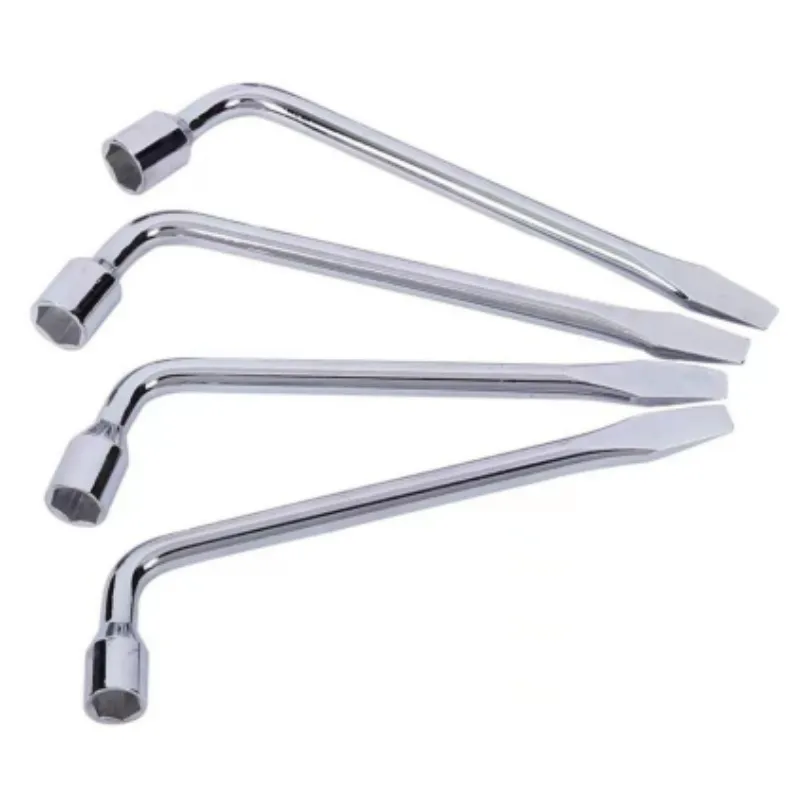
The L Type Wheel Spanner is often used for changing wheels on cars. It's designed for high - torque applications. But like the others, it doesn't have the convenience of a ratchet. You have to lift and re - position it with each turn.
The material used in the construction of a high - quality ratchet spanner is also key. As I mentioned earlier, hardened steel is a popular choice for the ratcheting mechanism and the head. The body of the spanner might be made of chrome - vanadium steel. This type of steel is known for its strength and corrosion resistance. It can withstand the rigors of daily use, even in harsh environments. If you're working in a wet or humid area, a ratchet spanner made of corrosion - resistant steel will last longer and perform better.
The finish of the spanner is not just for looks. A good finish can also protect the spanner from damage. For example, a chrome plating not only gives the spanner a shiny appearance but also provides a layer of protection against rust and corrosion. It also makes the spanner easier to clean.
Some high - quality ratchet spanners come with additional features. For example, there are some that have a quick - release mechanism. This allows you to easily change the socket or the head of the spanner. It's really handy if you need to use different sizes of sockets for different jobs. You don't have to waste time fumbling around with a separate tool to remove and attach the socket.

In terms of size and weight, a high - quality ratchet spanner should be well - balanced. It shouldn't be too heavy, as that can make it tiring to use for long periods. But at the same time, it needs to be heavy enough to provide the necessary torque. The size of the spanner should also be appropriate for the job. You don't want to use a large spanner for a small nut or a small spanner for a large bolt.
So, if you're in the market for a high - quality ratchet spanner, keep these design features in mind. As a supplier, I can offer you a wide range of ratchet spanners that meet these high standards. Whether you're a professional mechanic, a DIY enthusiast, or someone who just needs a reliable tool for occasional home repairs, I've got you covered.
If you're interested in purchasing our ratchet spanners, feel free to reach out for a chat. We can discuss your specific needs and find the perfect spanner for you. We're always happy to help and look forward to doing business with you.
References:
- Handbook of Hand Tools Engineering
- Guide to High - Quality Tool Design


